In May 2026, the world witnessed one of the most significant internet shutdowns ever recorded.
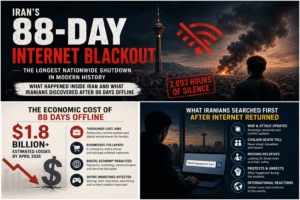
After 88 days and 2,093 hours of near-total isolation from the global internet, Iran finally began reconnecting to the online world. Internet monitoring organization NetBlocks described it as the longest nationwide internet shutdown recorded in modern history.
For nearly three months, millions of Iranians lived inside a digital wall.
International platforms including Instagram, WhatsApp, Gmail, YouTube, and many foreign news websites became inaccessible or severely restricted. Families lost communication with relatives abroad, online businesses struggled to survive, and citizens faced limited access to independent reporting during one of the country’s most tense political and military periods in recent years.
When internet access slowly returned, millions of Iranians rushed online not for entertainment — but to understand what had happened inside their own country during the blackout.
How Iran’s Internet Shutdown Began
The shutdown reportedly began on January 8, 2026, during a period of nationwide protests and rising political tensions.

Iranian authorities stated that internet restrictions were necessary for national security, cyber defense, and preventing foreign interference. However, digital rights organizations and international observers argued that the blackout also limited the flow of information during protests and military developments.
The situation escalated further after regional conflict involving the United States and Israel intensified in late February 2026. During this period, internet traffic inside Iran reportedly dropped to extremely low levels compared to normal activity.
According to internet monitoring groups, some areas experienced almost complete disconnection from international networks for weeks at a time.
The result was one of the largest and longest internet disruptions ever experienced by a modern connected nation.
What Life Looked Like During the Blackout
For ordinary citizens, the shutdown affected almost every part of daily life.
Students struggled to access online educational platforms. Freelancers lost contact with international clients. Remote workers could not continue projects. Digital entrepreneurs relying on Instagram shops and Telegram businesses saw their income disappear almost overnight.
Iran’s digital economy had grown rapidly over the last decade and supported thousands of small businesses, developers, designers, and online service providers. The sudden disruption created severe financial pressure across multiple industries.
Many families living outside Iran also lost regular communication with relatives inside the country. Phone connections became unreliable, messaging applications stopped functioning normally, and access to international email services remained restricted for extended periods.
The blackout also created confusion about events happening inside the country.
Millions of Iranians had limited or no access to independent international reporting about protests, military developments, bomb damage, civilian casualties, or political arrests. Instead, citizens relied heavily on state-controlled broadcasting networks and limited domestic online systems.
The Economic Cost of Going Offline
The financial damage caused by the internet blackout quickly became a major concern.
According to estimates cited by international monitoring groups and analysts, Iran’s economy was losing tens of millions of dollars daily during the shutdown period. By April 2026, estimated economic losses had reportedly crossed $1.8 billion.
The losses impacted:
- Online businesses
- Freelancers
- E-commerce platforms
- Tech startups
- Digital marketing agencies
- Gaming companies
- Remote workers
- International service providers
For many young Iranians, internet access was directly connected to employment and income.
Small business owners who depended on Instagram sales reportedly faced weeks without customers. Software developers and designers working for foreign companies lost communication channels. Content creators and online educators suddenly found themselves disconnected from their audiences.
Cybersecurity researchers also noted that Iran’s centralized internet infrastructure allowed authorities to restrict international traffic while still maintaining limited domestic network operations.
This strategy helped local government-linked services continue functioning even as access to the wider global internet remained restricted.
What Happened When Iran Reconnected
On May 26, 2026, monitoring groups began detecting signs of partial internet restoration across Iran.
Traffic levels slowly increased, although connectivity remained unstable and many restrictions continued to exist. Reports indicated that Gmail access was among the first signs noticed by users inside the country.
Even after restoration began, internet activity reportedly returned to only a fraction of normal levels during the early stages.
Citizens reconnecting to the internet described mixed emotions:
- relief
- confusion
- grief
- fear
- curiosity
One of the first public messages shared after restoration reportedly honored people who had died during the unrest and conflict period.
Foreign journalists covering the restoration noted that many citizens remained cautious about speaking openly online. While technical connectivity improved, concerns about surveillance and possible reprisals did not disappear immediately.
The internet returned gradually. Public trust did not.
Why the Iranian Blackout Matters Globally
The Iranian internet crisis has become far more than a regional political story.
Technology experts, journalists, cybersecurity researchers, and human rights organizations around the world are now studying the shutdown as a major example of how governments can control digital communication during periods of unrest or conflict.
The blackout highlighted how internet infrastructure has become deeply connected to:
- national security
- political stability
- economic survival
- media control
- public communication
Experts say modern governments increasingly understand that controlling digital information can strongly influence public perception during crises.
Iran’s shutdown also demonstrated the vulnerabilities of modern digital economies. When internet access disappears, millions of people can instantly lose access to work, communication, education, and financial systems.
The event has also intensified global debates around:
- internet freedom
- digital censorship
- cyber governance
- information warfare
- state-controlled internet systems
Several analysts now believe future geopolitical conflicts may involve internet restrictions as commonly as traditional military operations.
Iran’s Expanding Digital Control System
Over the last several years, Iran invested heavily in developing a domestic digital infrastructure often referred to as the “National Information Network.”
The system was designed to reduce dependence on international internet services and maintain internal communications during external disruptions.
Technology researchers have compared parts of the strategy to internet control systems used in countries such as China and Russia.
Experts believe the 2026 shutdown showed how centralized internet architecture can allow governments to selectively disconnect international access while keeping domestic systems partially operational.
This approach created what many observers described as a “digital iron curtain” around the country for nearly three months.
What Happens Next?
The future of Iran’s internet situation remains uncertain.
Although partial restoration has occurred, reports suggest that several restrictions are still active and that legal disagreements continue inside the Iranian political system regarding the reopening process.
Businesses now face the challenge of rebuilding lost income and reconnecting with international customers. Citizens continue searching for information about events that occurred during the blackout period. Technology experts are watching closely to see whether Iran adopts even tighter digital controls in the future.
At the same time, the crisis has already changed the global conversation around internet access and state power.
For millions of people worldwide, the Iranian blackout became a reminder that internet connectivity is no longer simply about social media or entertainment.
It affects communication, education, journalism, business, emergency response, and access to independent information.
And in moments of political crisis or war, control over the internet may shape how entire populations understand reality itself.
FAQs
Why did Iran shut down the internet?
Iranian authorities said the shutdown was necessary for national security, cyber defense, and controlling unrest during protests and military tensions.
How long was Iran offline?
Iran experienced around 2,093 hours of major internet disruption over 88 days, making it one of the longest nationwide shutdowns recorded in modern history.
How much money did Iran lose during the blackout
Estimates suggested economic losses reached billions of dollars due to disrupted online businesses, digital services, and international commerce.
Did social media work in Iran during the blackout?
Most international platforms including Instagram, WhatsApp, YouTube, and Gmail were heavily restricted or inaccessible without VPN tools.
Why is this shutdown important globally?
Experts believe the blackout could become a major case study in digital censorship, cyber governance, and information control during geopolitical conflicts.
Related posts:
 $300 Grocery Rebate USA 2025: Who’s Eligible & When You’ll Get It
 Top 5 Online Side Hustles for 2025 You Can Start with Zero Investment
 $3,500 Child Tax Credit Refund Coming in July 2025 – IRS Eligibility & Deposit Dates: What Families Need to Know
 What is a Digital Signature Certificate (DSC)? Class 3 Explained (2025 Guide)