Updated November 2026: we reviewed this article against current official sources.
- The One Nation One Ration Card (ONORC) scheme lets NFSA beneficiaries collect rations from any fair price shop in the country; check entitlements on nfsa.gov.in or the Mera Ration app.
- Free foodgrains under PM Garib Kalyan Anna Yojana were extended for five years from January 1, 2024.
Remember the days of worn-out, paper ration cards? The hassle of being tied to a single shop and the worry of lost pages are soon to be relics of the past. India is making a massive technological leap in its public welfare system, and it all revolves around the nationwide rollout of the Digital Ration Card 2025.
This initiative is a cornerstone of the “One Nation, One Ration Card” vision, aiming to transform how hundreds of millions of citizens access their food subsidies. By blending technology with social security, this move is set to boost transparency, cut down on fraud, and empower beneficiaries like never before. Let’s dive into what this means for you.
What Exactly is the Digital Ration Card?
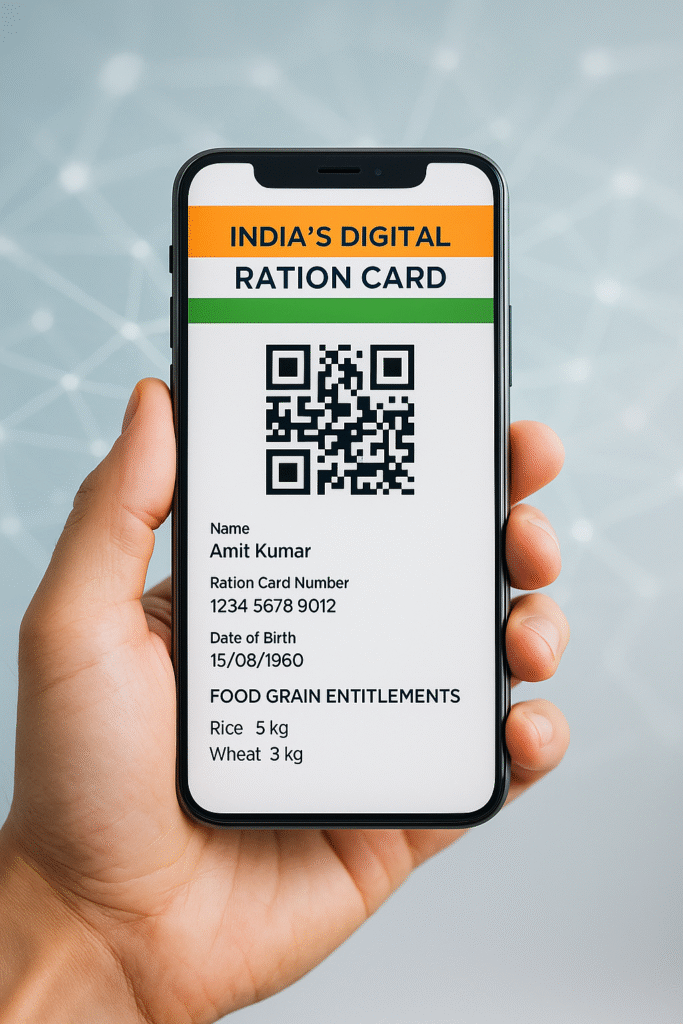
Think of the new Digital Ration Card as a smart, portable version of your traditional card. It’s not a physical card but a digital profile linked to your Aadhaar number. This e-Ration Card allows you to collect your monthly food grain entitlements—like wheat, rice, and sugar—from any Fair Price Shop (FPS) across the entire country.
The biggest game-changer? Portability. Previously, your ration card was only valid at a specific, assigned shop in your hometown. This was a huge challenge for migrant workers and families who moved for jobs. Now, with the Digital Ration Card India 2025, your food security travels with you.
This system works on a centralized database that tracks transactions in real-time, eliminating ghost beneficiaries and ensuring that subsidies reach the people who truly need them.

Key Benefits: Why This Digital Leap Matters
The shift from paper to a digital platform isn’t just about convenience; it’s about building a more efficient and accountable system. Here are the core benefits you can expect:
Nationwide Portability: Your Ration, Your Rules
This is the headline feature. Whether you’re a worker moving from Bihar to Maharashtra or a family relocating from Punjab to Tamil Nadu, you can walk into any local Fair Price Shop, authenticate your identity, and claim your food allowance without any hassle.
Enhanced Security with Biometrics
Fraud and impersonation have plagued the old system for decades. The new e-Ration Card is linked directly to Aadhaar, using biometric authentication (your fingerprint or iris scan) to verify your identity.1 This ensures that your rations cannot be claimed by anyone else.
Real-Time Transparency and Updates
Every transaction is logged electronically on a central server. This means you can track your entitlements and usage through a dedicated mobile app or web portal. You’ll even receive SMS alerts on your registered mobile number about your ration availability and when you’ve made a transaction.
Cutting Down on Corruption and Waste
By digitizing records, the government can easily identify and remove duplicate or ineligible cards from the system. States that have piloted this technology have already seen a significant drop in leakages, meaning taxpayer money is being used more effectively to support genuine beneficiaries.
How to Get Your New e-Ration Card
The process of moving to the digital system is designed to be straightforward. The government aims to have 100% of eligible citizens onboarded by the end of 2025. Here’s how you can apply:
- Visit the Official Portal: Head to your state’s official food and civil supplies department website or visit a nearby Common Service Center (CSC).
- Provide Necessary Documents: You will need your Aadhaar card (for identity), proof of residence (like an electricity bill or rent agreement), and an income certificate to verify your eligibility.
- Complete Biometric Registration: All family members included on the ration card will need to complete their biometric (fingerprint) registration, which is linked to their Aadhaar.2
- Verification and Issuance: Once your details are submitted and verified by the authorities, your Digital Ration Card will be activated. You’ll receive a confirmation, and you can download a digital, QR-coded version of your card from the portal or mobile app.
The Bigger Picture: A Game-Changer for India’s Welfare
The ration card digitization in India is more than just a tech upgrade; it’s a fundamental reform of the Public Distribution System (PDS). It strengthens the framework of the National Food Security Act (NFSA) by ensuring food access becomes more dignified, reliable, and equitable.
Furthermore, this digital infrastructure improves India’s resilience during emergencies. In the event of natural disasters or other crises, displaced families can access essential food supplies from anywhere, without being caught up in procedural red tape.
Final Thoughts
The India Digital Ration Card 2025 initiative is a powerful example of how technology can be harnessed for social good. It empowers citizens with mobility and control over their entitlements while building a transparent system for the government. As this digital transformation unfolds, it’s a crucial step towards ensuring no one is left behind.
What are your thoughts on this digital transformation? Has your family switched to the e-Ration Card yet? Share your experience in the comments below!
If you found this guide helpful, please share it with friends and family who might benefit. Don’t forget to explore our other posts on technology and finance in India!
Disclaimer: This article is for general informational purposes only and does not constitute legal, financial, tax, investment or immigration advice. Rates, thresholds, benefit amounts and deadlines change and depend on your circumstances. Verify details with the official source (such as the IRS, HMRC, DWP, CRA, the Income Tax Department of India or the UAE Federal Tax Authority) and consult a qualified professional before acting. taxtotech.com is not affiliated with any government agency.
Frequently Asked Questions (FAQs)
Q1: What documents are required for the Digital Ration Card?
A: You’ll primarily need your Aadhaar card for all family members, a valid proof of current residence (like an electricity bill or passport), and an income certificate as per your state’s guidelines.
Q2: Can I really use my digital ration card anywhere in India?
A: Yes! That’s the core benefit of the “One Nation, One Ration Card” scheme. You can access your food grain entitlements from any Fair Price Shop (FPS) in any state or union territory.3
Q3: What happens to my old physical ration card?
A: Old physical cards are being phased out. Once your details are verified and onboarded to the digital system, your access will be primarily through your Aadhaar-linked biometric authentication, not the physical card.
Q4: Do I need a smartphone or internet to get my rations?
A: No. While a smartphone is useful for checking your entitlements via the app, it’s not necessary to claim your rations. The Fair Price Shop’s electronic Point of Sale (ePoS) machine will use your fingerprint for verification, which doesn’t require you to have a phone or internet.
Q5: How can I check if my ration card has been digitized?
A: You can check the status on your state’s PDS portal using your old ration card number or Aadhaar number.4 You should also receive an SMS notification on your registered mobile number once the process is complete.