Updated November 2026: we reviewed this article against current official sources.
- DVLA handles licences, vehicle tax and registration; DVSA runs driving tests and MOT standards. That split is unchanged.
- DVSA changed car test booking rules in 2026: only learners can book their own tests, with limits on changes. See GOV.UK.
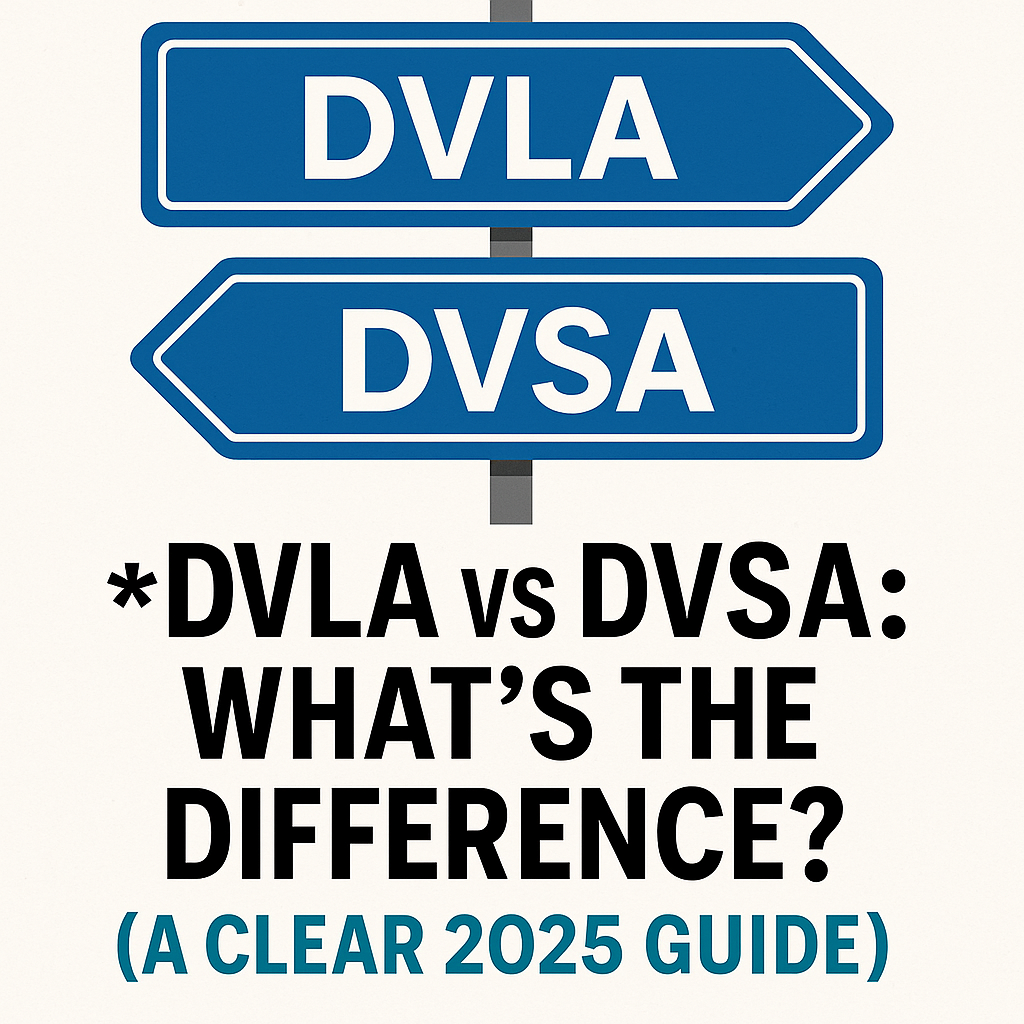
For anyone driving in the United Kingdom, the world of motoring administration can feel like an alphabet soup of acronyms. Two of the most important, and often confused, are DVLA and DVSA. While both are government agencies that play a crucial role in keeping our roads safe and organised, they have very different responsibilities.
Getting them mixed up is common, but understanding who does what can save you a lot of time and confusion, whether you’re applying for your first licence, taxing your car, or booking a test.
This guide will clearly break down the key differences between the DVLA and the DVSA, explaining their specific roles and when you are likely to interact with each one.
What is the DVLA? The UK’s Motoring Database
The DVLA stands for the Driver and Vehicle Licensing Agency.
Think of the DVLA as the central record-keepers for all drivers and vehicles in the UK. Their primary role is administrative and revolves around maintaining a massive, comprehensive database. If it involves a licence, a logbook, or vehicle tax, it’s a DVLA matter.
Also Read

The DVLA’s key responsibilities include:
- Issuing Driving Licences: From provisional to full licences, the DVLA creates and distributes them.
- Maintaining Driver Records: They keep track of every driver’s details, including their address and any penalty points or disqualifications.
- Vehicle Registration: When a car is first registered, the DVLA issues its V5C logbook (registration certificate).
- Collecting Vehicle Tax: The DVLA is responsible for processing Vehicle Excise Duty (VED) payments.
- Keeping Registered Keeper Details: They maintain the official record of who is responsible for a vehicle.
You will deal with the DVLA when you need to:
- Apply for your first provisional driving licence.
- Renew your driving licence photocard every 10 years.
- Update your address or name on your licence or V5C logbook.
- Tax your vehicle.
- Declare your vehicle as off the road (SORN).
- Tell them you have bought, sold, or transferred a vehicle.
What is the DVSA? The Guardians of Road Standards
The DVSA stands for the Driver and Vehicle Standards Agency.
Think of the DVSA as the guardians of safety and standards on UK roads. Their role is practical and focused on enforcement and testing. They ensure that both drivers and vehicles meet the minimum legal standards for safety and environmental impact.
The DVSA’s key responsibilities include:
- Conducting Driving Tests: They set the standards for and carry out all theory and practical driving tests for cars, motorcycles, lorries, and buses.
- Approving Driving Instructors (ADIs): The DVSA approves people to become driving instructors and ensures they maintain a high standard of tuition.
- Running the MOT Test Scheme: While they don’t carry out most MOT tests themselves, they authorise MOT testing stations and set the inspection standards.
- Enforcing Vehicle Safety: They conduct roadside checks on commercial vehicles (like lorries and buses) to ensure they are safe and roadworthy.
- Managing Vehicle Recalls: They investigate potential safety defects in vehicles and work with manufacturers on recalls.
You will deal with the DVSA when you need to:
- Book your theory test or practical driving test.
- Take your car, van, or motorcycle for its annual MOT test.
- Find an approved driving instructor in your area.
- (If you’re a commercial driver) during a roadside inspection.
Key Differences at a Glance: DVLA vs DVSA
This simple table makes the distinction crystal clear:
| Responsibility | DVLA (The Record-Keepers) | DVSA (The Standard-Setters) |
|---|---|---|
| Core Function | Licensing and registration databases. | Testing, safety standards, and enforcement. |
| Driving Licences | Issues and maintains the licence. | Tests you to qualify for the licence. |
| Vehicle Documents | Issues the V5C logbook. | Sets standards for the MOT certificate. |
| Tax vs. Test | You pay your vehicle tax to the DVLA. | You take your MOT test under DVSA rules. |
| Primary Focus | Paperwork and records. | Practical tests and on-road safety. |
A Simple Analogy to Remember
To lock in the difference, think of it like joining a library:
- The DVLA is the Librarian. They create your library card (driving licence), keep your details on file, and handle the annual membership fee (vehicle tax).
- The DVSA is the Examiner. They give you a test to make sure you can read and understand the books before you get your card (the driving test) and perform an annual check to ensure the books you borrow are in good condition (the MOT test).
Who to contact for what
| Task | Agency |
|---|---|
| Apply for or renew a driving licence, change address on licence | DVLA |
| Tax a vehicle, SORN, V5C logbook | DVLA |
| Book or change a driving test, theory test | DVSA |
| MOT standards, MOT centre complaints, vehicle recalls | DVSA |
| Medical conditions affecting driving | DVLA |
| Driving instructor registration (ADI) | DVSA |
Avoid copycat websites
Unofficial sites charge extra fees for services that are free or cheaper on GOV.UK, such as licence renewals or test bookings. Always start from gov.uk/browse/driving. Since May 2026, only learners can book their own car driving tests, so be especially wary of third-party “test booking” services.
Northern Ireland
In Northern Ireland, driver and vehicle testing and licensing are handled by the Driver and Vehicle Agency (DVA), not DVLA or DVSA.
FAQ
Who do I tell about a medical condition that affects my driving?
The DVLA (or the DVA in Northern Ireland). You can be fined if you don’t tell them about a notifiable condition.
Who handles MOT tests?
Approved garages carry out MOTs, while the DVSA sets the standards and supervises testing stations.
Both DVLA and DVSA are executive agencies of the Department for Transport, which is why their roles are often confused.
Disclaimer: This article is for general informational purposes only. Product names, features, availability and pricing change frequently and vary by country. Mentions of companies and products are for information only and are not endorsements; taxtotech.com is not affiliated with the companies named. Verify details on official vendor websites before you buy or rely on any tool.
Conclusion
While their names sound similar, the DVLA and DVSA perform two very distinct and vital functions. The DVLA manages the who and the what—the database of every licensed driver and registered vehicle. The DVSA manages the how—the standards that drivers and vehicles must meet to be allowed on our roads.
Together, they form a comprehensive system that ensures UK roads are used by qualified drivers in roadworthy vehicles. So next time you see one of these acronyms, you’ll know exactly who you’re dealing with: the record-keepers or the standard-setters.
Related posts:
 Is There a $300 Grocery Rebate in the USA? Fact Check and Real Food Help (2026)
 Top 5 Online Side Hustles for 2026 You Can Start with Little or No Investment
 Will AI Replace Programmers? What the Evidence Says About Developer Jobs in 2026
 Top DSC Providers in India: Compare Features & Turnaround Time (Updated 2026)