
Updated November 2026: we reviewed this article against current official sources.
- US: the One Big Beautiful Bill Act (July 4, 2025) made the higher standard deduction permanent. For 2026 it is $16,100 (single), $32,200 (married filing jointly) and $24,150 (head of household). Source: IRS.
- US: Form 1099-K is again required only when payments exceed $20,000 and 200 transactions a year, but all income is still taxable.
- UK: Making Tax Digital for Income Tax started in April 2026 for sole traders and landlords with qualifying income over £50,000.
- AI tools can make mistakes. Check AI answers against official guidance (IRS, HMRC, CRA, the Income Tax Department or the FTA) before you file.
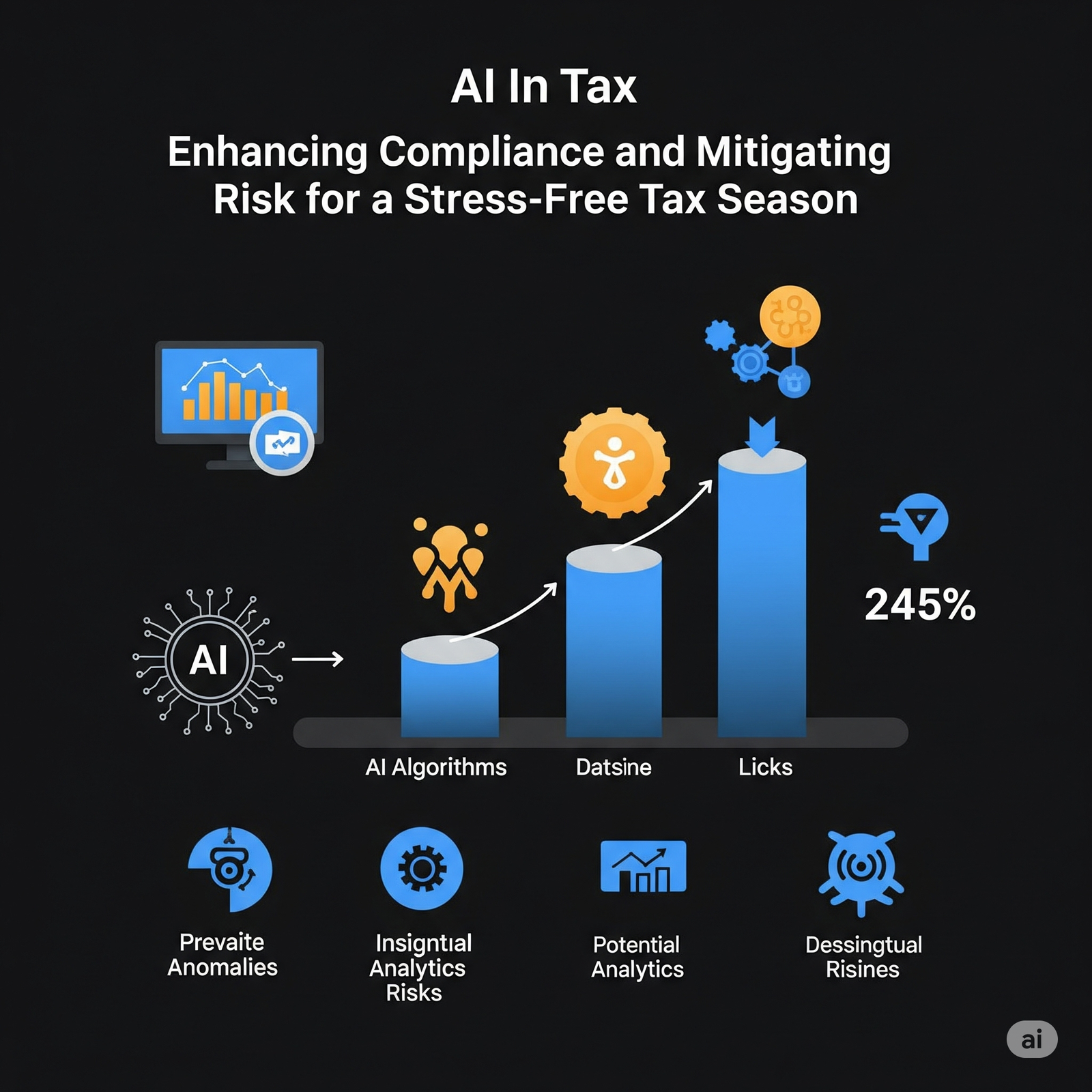
In the ever-evolving landscape of tax regulations, staying compliant and minimizing financial risk can feel like a constant uphill battle. Businesses and individuals alike grapple with complex laws, frequent updates, and the daunting prospect of audits. However, the integration of Artificial Intelligence (AI) into tax processes is rapidly transforming this challenge into a manageable, even proactive, endeavor. AI-powered solutions are becoming indispensable tools for ensuring accuracy, streamlining compliance, and significantly mitigating tax-related risks.
The Growing Complexity of Tax Compliance
Tax laws are rarely static. Jurisdictions frequently introduce new regulations, amend existing ones, and interpret rules in different ways. For multinational corporations, the complexity multiplies across borders, while even small businesses and individuals face a maze of deductions, credits, and reporting requirements. The sheer volume of data, coupled with the need for meticulous accuracy, makes manual compliance a time-consuming and error-prone process. This is where AI steps in as a game-changer.
How AI Elevates Tax Compliance
AI brings a suite of capabilities that directly address the pain points of tax compliance:
- Automated Data Collection and Processing: AI can seamlessly integrate with various financial systems, automatically collecting and categorizing transactional data. This eliminates manual data entry, a primary source of errors, and ensures that all relevant financial activities are accurately recorded and ready for tax purposes.
- Real-Time Regulatory Monitoring: Keeping up with tax law changes is a full-time job. AI systems can continuously scan global regulatory databases, instantly flagging updates and assessing their impact on an organization’s or individual’s tax obligations. This proactive approach allows for timely adjustments to strategies, minimizing the risk of non-compliance.
- Enhanced Accuracy and Error Detection: AI algorithms are designed to identify patterns and anomalies that human eyes might miss. They can cross-reference data, validate calculations, and pinpoint inconsistencies in financial records, significantly reducing the likelihood of errors that could lead to penalties or audits.
- Risk Assessment and Predictive Analytics: Beyond just detecting errors, AI can analyze historical data and current financial activities to predict potential compliance gaps or areas of high risk. By identifying these vulnerabilities in advance, businesses and individuals can take corrective action before problems escalate, turning potential liabilities into opportunities for proactive management.
- Streamlined Audit Support: In the event of an audit, AI-powered systems can swiftly retrieve and present all necessary documentation and data. This creates a transparent and easily auditable digital trail, significantly streamlining the audit process and reducing disruption.
- Personalized Guidance and Chatbots: AI-powered chatbots and virtual assistants can provide instant, personalized guidance on tax regulations and compliance questions. These tools offer accessible educational content, improving taxpayers’ understanding of their obligations and helping them navigate complex scenarios.
Mitigating Risk with AI
The benefits of AI extend beyond mere compliance to robust risk management:
- Reduced Penalties: By minimizing errors and ensuring adherence to the latest regulations, AI directly reduces the risk of costly fines and penalties associated with non-compliance.
- Improved Decision-Making: With accurate, real-time insights into tax liabilities and opportunities, businesses can make more informed strategic decisions regarding financial planning, investments, and operational adjustments.
- Fraud Detection: AI’s ability to analyze large datasets and identify unusual patterns makes it a powerful tool in detecting potential tax fraud, both internal and external, safeguarding financial integrity.
- Resource Optimization: Automating repetitive and time-consuming tasks frees up valuable human resources, allowing tax professionals to focus on more strategic, value-added activities like complex analysis and advisory services.
Where AI helps with compliance
| Task | How AI helps | Human check needed |
|---|---|---|
| Data capture | Reads invoices and receipts, matches bank transactions | Review unusual or high-value items |
| Categorisation | Suggests expense categories and VAT/GST codes | Confirm treatment for mixed or unusual expenses |
| Anomaly detection | Flags duplicates, outliers and missing documents | Investigate and document explanations |
| Deadline tracking | Reminds you of filing and payment dates | Confirm dates with the tax authority |
| Research | Summarises guidance | Verify against official sources before relying on it |
Digital tax compliance changes to watch
- UK: Making Tax Digital for Income Tax began in April 2026 for sole traders and landlords with qualifying income over £50,000, with lower thresholds planned for later years.
- EU: the “VAT in the Digital Age” package will phase in digital reporting and e-invoicing for cross-border B2B transactions over the coming years.
- India: GST e-invoicing applies to businesses above the turnover threshold, and the Income-tax Act, 2025 took effect on April 1, 2026.
- UAE: the FTA is introducing e-invoicing in phases, starting with larger businesses.
- US: the 1099-K threshold returned to $20,000 and 200 transactions, and more information returns move to a $2,000 threshold from 2026.
Risks to manage
- Wrong answers: AI may cite outdated rules confidently.
- Data security: financial data is sensitive; use tools with strong security and clear data terms.
- Accountability: you remain responsible for what you file, even if software made the error.
FAQ
Can AI reduce my audit risk?
It can catch errors and missing documents, which helps, but it can’t guarantee you won’t be audited.
Also Read

Is AI tax software accepted by tax authorities?
Yes, if it’s approved or compatible where required (for example HMRC-recognised MTD software).
Disclaimer: This article is for general informational purposes only and does not constitute legal, financial, tax, investment or immigration advice. Rates, thresholds, benefit amounts and deadlines change and depend on your circumstances. Verify details with the official source (such as the IRS, HMRC, DWP, CRA, the Income Tax Department of India or the UAE Federal Tax Authority) and consult a qualified professional before acting. taxtotech.com is not affiliated with any government agency.
Conclusion: Navigate Tax with Confidence, Powered by AI
The integration of AI into tax processes is no longer a futuristic concept; it’s a present-day necessity for anyone seeking to navigate the complexities of taxation with confidence. From automating data handling and monitoring regulations to predicting risks and supporting audits, AI empowers you to achieve a higher level of compliance and significantly mitigate financial exposure.
At Taxtotech, we believe in harnessing the power of technology to simplify your financial life. Embracing AI in your tax strategy means moving beyond reactive compliance to a proactive, intelligent approach that safeguards your financial well-being.
We’d love to hear your thoughts and experiences!
- What are your biggest concerns when it comes to tax compliance and risk?
- Have you used any AI tools or features that have helped you manage your tax obligations more effectively?
- What other areas of tax management do you think AI could revolutionize in the future?
Share your insights in the comments below! Your contributions help us all better understand and leverage the power of AI in tax. For more expert insights and practical guides on financial technology, keep exploring https://taxtotech.com. Let’s embrace a smarter, more secure tax season together!
Related posts:
 Is There a $300 Grocery Rebate in the USA? Fact Check and Real Food Help (2026)
 Top 10 Prompts Bloggers Use to Write or Rewrite Content with ChatGPT, Gemini & Claude (2026)
 The Future of Tax Departments: Upskilling for an AI-Driven Business Landscape
 Attendance Allowance UK 2026/27: How Much You Can Get + Application Tips